

News

28/04/2026 by Kvaser

A conversation with Kent Lennartsson: Reflections from Kvaser’s first employee

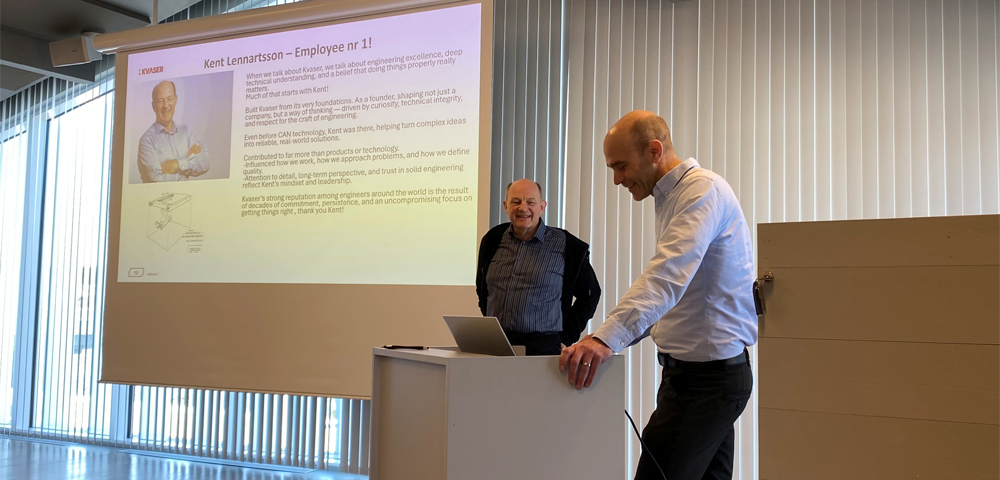
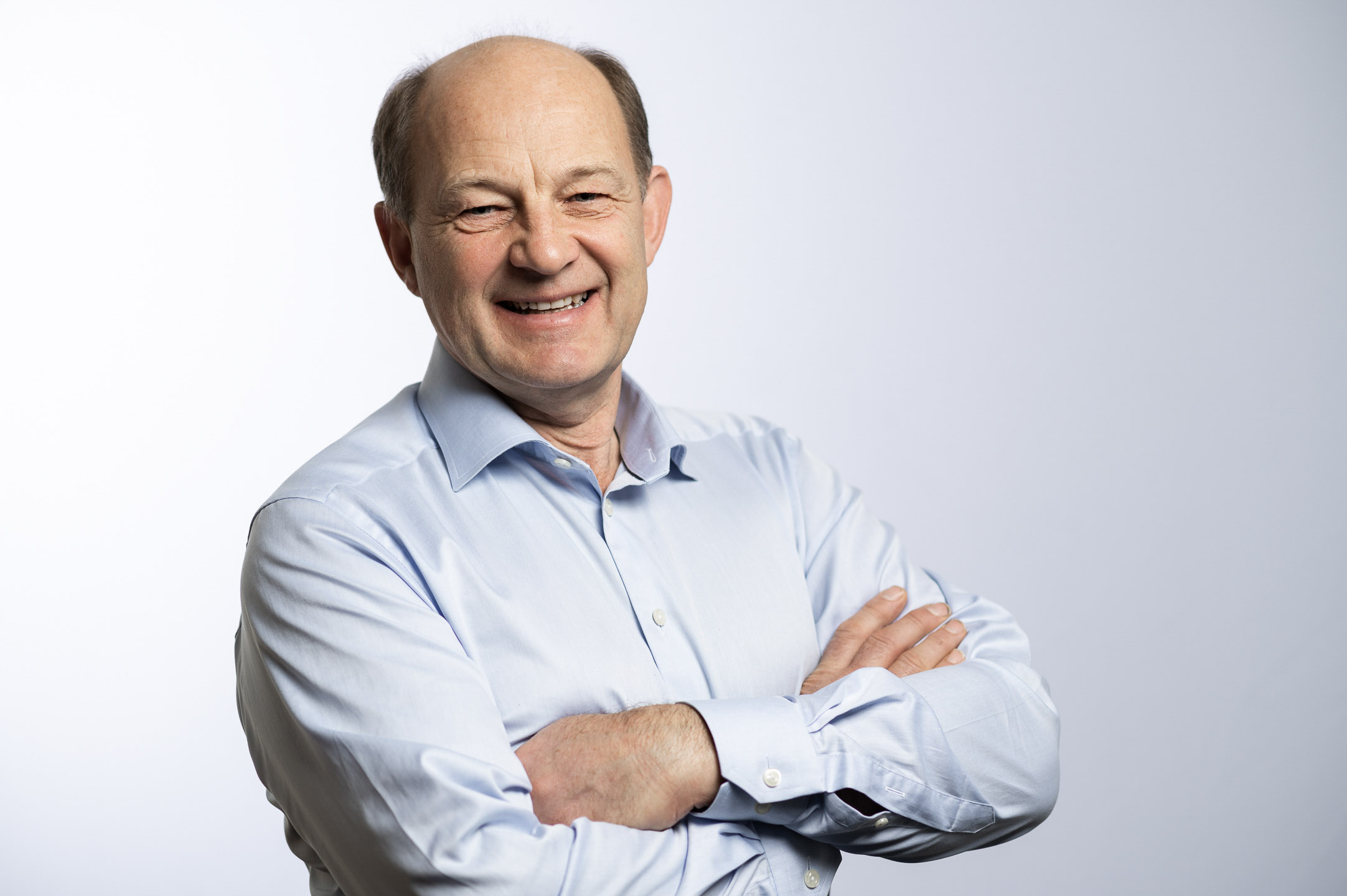
As Kvaser’s very first employee and, for many years, the driving force behind its research efforts, Kent Lennartsson has had a front-row seat to four decades of change in automotive communication. This month, as he prepares to retire, he leaves behind not just technical contributions, but a way of thinking that has helped shape Kvaser’s pragmatic, engineeringfirst approach.

We sat down with Kent to ask a few questions about how the industry has evolved, what still surprises him, and what he wishes more engineers would keep in mind as vehicles become ever more connected. 
Looking back at the last few years, what surprised you most about how CAN, CAN FD and CAN XL have evolved in practice? 

The first big surprise is actually how long CAN Classic stayed unchanged. CANCC was introduced in 1985 and remained essentially the same until 2015; that’s almost 30 years without a fundamental update. That level of longevity really says something about how well it was designed from the start. 

The second surprise is how quickly things moved after that. CAN XL appeared around 2020, only about five years after CAN FD, and at a time when there were still relatively few products fully supporting CAN FD. The pace of development suddenly accelerated. 

What we see now is that CANCC and CAN FD are still more than good enough for many applications. CAN XL, however, is more generic. It’s better suited for use cases where you need things like encryption, or where you want to transport and bridge other types of data packets, such as Ethernet, over a CANbased network. 

If you had to describe the current state of Automotive Ethernet integration in one sentence, what would you say? And do you see a “return to CAN” or a slowing of Ethernet integration? 

Ethernet is the only standard protocol designed for multigigabit communication in a rough environment, which is exactly what’s required for cameras, lidar, and other highbandwidth sensors. 

At the same time, CAN was designed specifically for realtime control in vehicles. Core vehicle functions – engine power, steering, braking, suspension – haven’t fundamentally changed in the last 40 years. For those tasks, it’s much easier and more efficient to use a technology that was designed specifically for realtime control, rather than modifying another technology to do something it wasn’t originally built to handle. 

So rather than a ’return to CAN,’ I’d say it’s more about putting each technology where it makes the most sense. 

What do you think the industry believes about Automotive Ethernet that isn’t quite true yet? 

Many people dream of a single, generic protocol – today that protocol is Ethernet – that can solve all tasks equally well. Ethernet was originally designed to move files between host applications and devices. Just because you can move a large amount of data very quickly doesn’t mean it’s the most efficient or reliable solution for realtime control. 

High bandwidth alone doesn’t guarantee deterministic behavior. For control systems, predictability and timing are often more important than raw speed. Ethernet can be adapted for these purposes, but that doesn’t mean it automatically becomes the best tool for every job.

What’s one thing you wish more engineers understood when choosing between CAN‑based networks and Ethernet?

Do not use CAN for a video link.
And do not use Ethernet for realtime control. 
Choose the technology that was designed for the task you need to solve. 

As Kent steps into retirement, his perspective serves as a reminder that progress isn’t always about replacing the old with the new. It is about understanding why certain technologies have endured, and where new ones truly add value. It’s a mindset that has shaped Kvaser from the very beginning, and one that will continue to influence the company long after his last day.